Frugal Book Club #9 – Make Your Travel Dollars Worth a Fortune: The Contrarian Traveler’s Guide to Getting More for Less
Wow, that is a verbose book title!
The book by Tim Leffel looks at how to get more out of your (international) vacations while spending less. Who wouldn’t want that?

I have read through the first two of three sections in the book. In section one, Tim talks about the big expenses associated with travel and how two hypothetical families, the Smiths and the Johnsons, waste and save money on airfare and lodging. The second section talks about dining, ground transportation, and souvenir shopping.
The essence of Tim’s travel philosophy is that the best trips and cheapest trips happen when we avoid the American pretense of travel. If I asked you to name a good beach destination, you would probably respond with Florida, Hawaii, or the Bahamas. The reason why those places come to mind is that they are heavily marketed. Those big budget ad campaigns come out of the pockets of tourists. In one example given in the book, a resort in the Bahamas got caught red handed publishing pamphlets of their resort with images of beaches found in Florida. Their response, “beaches all look the same anyway”. So if beaches all look the same, why spend big bucks to go to a well marketed one?
The theme of getting off the beaten track, avoiding the herd, and walking/talking/eating like a local is repeated frequently in the book. In many ways it reminded me of our recent trip to Mexico where we stayed in local apartments, ate at a food truck and other hole-in-the-walls, and swam in the local swimming hole.
I would recommend that you pick this book up and give it a read if you have ever only stayed at resorts or chain hotels, use tour buses, and never stray far from the touristy areas. If that doesn’t describe you, then you could probably skip this book.
Like Nancy Drew in An Old House
There is always a mystery in every home. What makes that weird noise in the middle of the night. Why is there a wall bump out there. How did that water stain get on the ceiling?
One question that has been plaguing me with our house ever since we moved in was our ‘fireplace’.

The first time we toured the house when we were shopping, I just thought, “cool it has a fireplace”. The listing said the house had a fireplace, so I took it at face value. The second or third time we walked through the house before buying, I inspected it a bit closer and found out it was a fake.

Where there should have been an opening or a door, there was wallpaper behind the metal faceplate. “Oh, okay, when they remodeled they must have sealed off the chimney”. It obviously did not affect our buying decision. We never had our hearts set on having a fireplace.
Still, thoughts about the ‘fireplace’ have always bothered me. The chimney was right there, so it was a logical place for a fireplace. It fit the room perfectly. Then there would be little clues here and there, like when our roof leaked in an epic freezing rain a month ago and I mentioned to my neighbor that maybe it would be better just to get rid of the entire chimney above the roof line, to which he replied that the previous owner had always hoped to restore the fireplace.
So, as I sat at my desk, 8 feet away from it today, I got the sneaking suspicion that maybe ‘blocking’ off the fireplace was more along the lines of “let’s drape some paper thin wallpaper across the opening and call it good”.
Getting up and really personal with it, I saw that the bottom trim wasn’t nailed into anything and could be removed by hand.

I could feel a draft of cold air emanate out from the sizable gap. Cob webs were whipping about as well. Uh oh. I remembered a different house that we tried to buy before this one, and it also had an open chimney with no damper to keep the cold air out. Would this be the same? The gap was too small to see with my own eyes, but I was able to squeeze my phone in to take some pictures.

That’s a chimney alright. I cannot see any daylight at the top of the picture, so there must be some sort of ventilation cap installed or maybe there is a damper. Now I have even more questions! First and foremost, are we losing 8% of our heating bill out a big hole in the middle of our house?
Homemade Entertainment
The days are slowly getting longer, but it is still very much winter here in Illinois. Last Friday night we decided to combat some of the wintery blues by making up our own version of the popular board game Qwirkle.

The game is like a cross between dominoes and scrabble. It will really test your brain as you try to lay your tiles down to score big points. Our homemade version was a bit rudimentary, but it was also free.

For the record, Shae kicked my butt. What do you do to keep busy on those long winter nights?
A Foray Into the World of Credit Card Churning
I have heard about credit card churning for several years now and it has never really interested me before. That began to change after our Mexico trip when the lights upstairs started to flicker on about ways to trim the fat on our next international trip.
What is Credit Card Churning?
Credit card churning is the act of signing up for credit cards for the sole purpose of collecting the, usually, large sign up bonus offer. As soon as one bonus is collected you move on to the next card. Some industrious, or foolhardy, individuals may open multiple cards at once to speed up the process.

Example Sign up Bonus
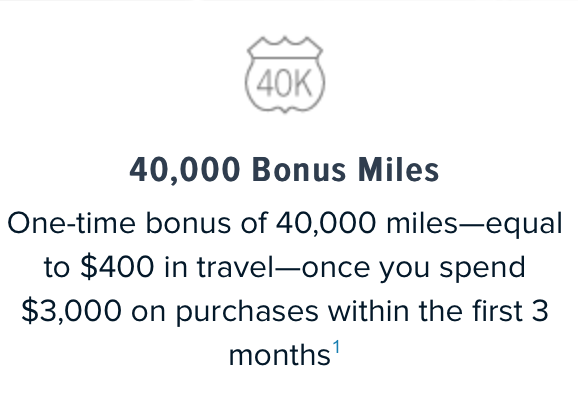
Here is another example sign up bonus. This one from Capital One’s Venture card.
Why Bother?
If you do it right, and that is a very understated statement, you have a lot to gain and very little to lose. Take the Venture card for example. If both you and your spouse complete the necessary bonus steps, you stand to save $920 on travel. In the case of our Mexico trip, that would have nearly halved the trip cost!
What’s the Catch(es)?
Tons. We are talking about credit card companies who make money by taking advantage of uninformed or ill informed individuals. Here are just a few of the gotchas you have to consider.
Minimum Spending Requirement
In order to receive that big points bonus, you usually have to spend a certain amount with the card within a certain period of time from being approved. For Venture, that is $3k within 3 months of approval. If you only spend 2999, you are SOL. No bonus points for you. You might think, that will be a piece of cake. I’ll just go to the ATM and withdrawal three grand. WRONG! That counts as a cash advance and will generate 25% interest immediately. A big no-no. Serious churners who take out multiple cards at once often rely on manufactured spending, or MS for short. MS is the process of using the credit card to obtain some sort of cash equivalent and then figuring out a way to get that equivalent back into their bank account. There are many different strategies for doing this, and most of them are perfectly legal. The strategies are always changing however as loopholes are closed. I would strongly advise that you do plenty of research before going down this rabbit hole.
For myself, I am intending to avoid MS altogether and reach the minimum spending through normal usage. It is important to consider whether or not you can meet the minimum spending requirement.
Annual Fees
With high sign up bonuses, come high annual fees. The Venture card and several others, waive the fee for the first year. The card companies hope that you’ll like the card so much or just forget about it that they will be able to milk the AF for years to come. You’ll need to have an exit strategy to deal with the annual fee. Sometimes you can downgrade the card to a $0 AF, or you may have to cancel the card outright. All of this needs to be taken into consideration BEFORE applying.
Credit Score
Your credit score will take a hit from doing this. Churning is not recommended for anyone with low credit or anyone that may need credit for something important (like a house or student loan). I am in a nice position where my credit score doesn’t really matter because I don’t need it for anything vital.
Point Redemption
What are you going to spend those bonus points on? The more important question is, CAN you spend those bonus points on what you want? Each card company has its own rewards program and set of points. The rules vary widely on whether they can be cashed out, transferred, or with whom they can be redeemed against. Bonus point awards often take 6-8 weeks to post to your account after meeting the minimum spending, so if you are pressed for time, you may not be able to capitalize on those sweet bonuses. The moral of the story is, have a clear goal on what you want points for.
Who Should Absolutely NOT Churn
If you have ever carried a credit card balance, if you have ever been late on a payment, if your credit score is below 720, if you have ever had a library fine for returning a book late, credit card churning is NOT for you. You need to be meticulous!
Getting Our Toes Wet
We have plans to travel to Costa Rica later this year, so our goal is to reduce the cost of that trip with credit card churning.
This morning after doing plenty of research, I applied and was approved for the Capital One Venture card. I chose this card for several clear reasons.

The Venture card was one of the only cards that let you apply points retroactively (within 90 days) against transactions in your statement history. This is very important due to the timing of the trip we plan to take. If you add up the 3 months of spending to reach the min spend, and then an additional 2 months to have the bonus points post, you are already at five months from now to when you have points that you can use. Assuming that you book your airfare at the recommended 6 weeks pre-travel, you are looking at almost 7 months lead time from applying to a card to when your trip is going to be.
Another reason to go with Venture is the flexibility of using points. Any transaction that posts as travel can be redeemed against. You are not locked into a particular airline or hotel chain.
The minimum spend was within our capabilities. There are some fantastic business card sign up bonuses out there and some bigger personal bonuses, but they all have higher min spends. As a frugal family, we just don’t spend that much to meet those higher limits.
The 2x miles for every dollar spent means that the actual cash value will be ($3000 min spend * 2) + 40,000 bonus = 46,000 points = $460 in travel reimbursement. If Shae also signs up for a card that will be $920 of ‘free’ travel.
I applied online and was approved right away. Satisfyingly, my free account with Credit Karma sent me an email almost instantaneously informing me about the hard inquiry.
As expected, my credit score took a hit.

Keeping calendar reminders and detailed records is a must.

I will have to do a follow up post when/if we succeed in our first credit card churn. I am a bit concerned about meeting the min spend on two cards, but if we do some of the home improvement projects we have been considering, it shouldn’t be a problem.
Leave a comment if you have churned before or if you have a question about churning.